
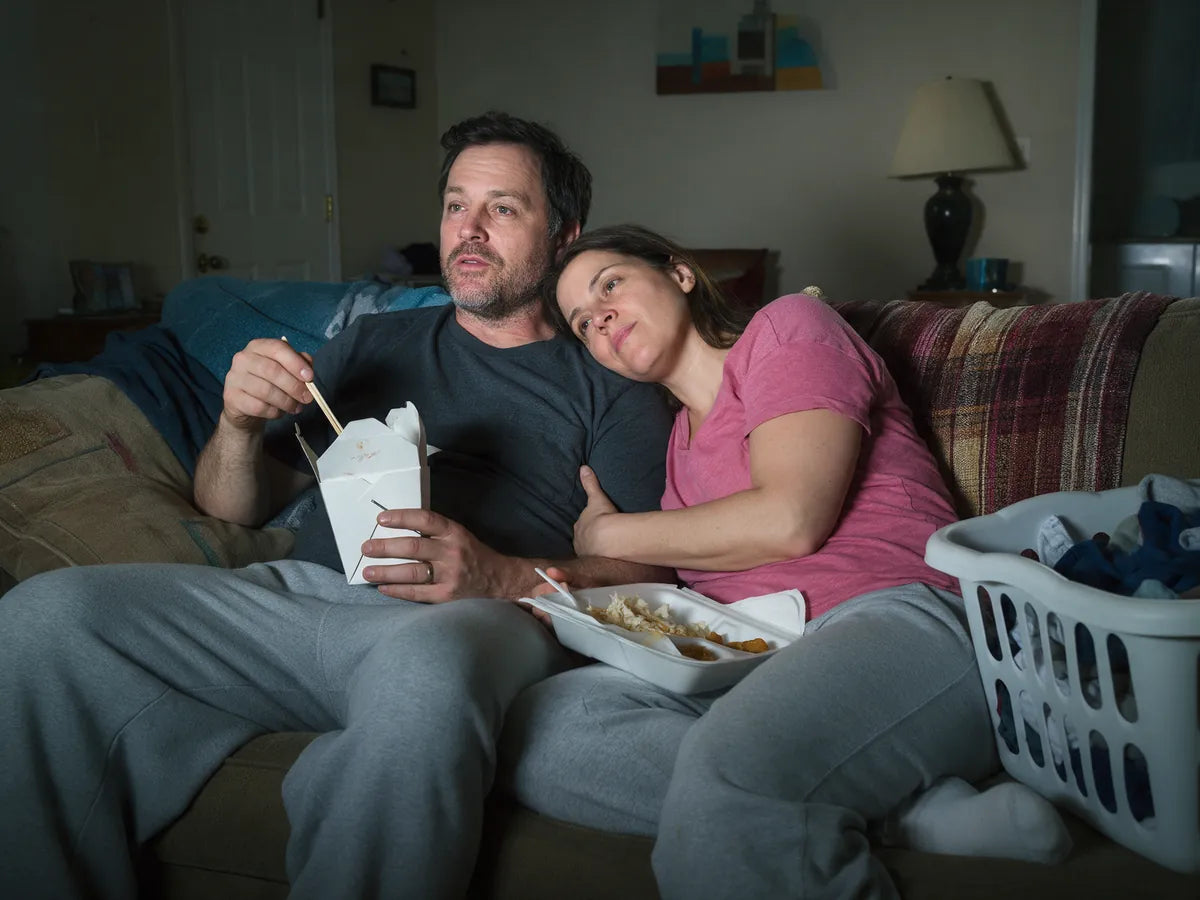
A low-energy date should reduce effort, not disguise an elaborate plan as self-care. Start by asking whether each person wants company, conversation, movement, touch, or space. Then choose the smallest shared activity that fits both answers. Rest is allowed, and an activity does not have to lead to a deeper conversation or physical intimacy.
Ask about the kind of energy available
Someone may want quiet company but not talking. Another person may want a short conversation without going anywhere. “What would feel easy tonight?” is more useful than assuming the right activity will make everyone energetic.
Do not treat a low-energy evening as a diagnosis or a relationship verdict. This guide does not explain why someone is tired, address health symptoms, or prescribe treatment. Persistent or concerning symptoms belong with appropriate professional support.
Option one: quiet company
Sit in the same room with your own books, small projects, or another calm activity. Agree that silence is welcome and that either person can choose space. After a short window, ask whether the format was pleasant enough to repeat.
There is no requirement to cuddle. Seating, light, sound, and proximity can all be adjusted. Being in the same room should not require one person to ignore discomfort.
Option two: one question and a snack
Choose a light question such as “What tiny thing made you smile today?” Take turns answering briefly and allow passing. A snack is optional; the activity is not a shopping instruction.
Avoid turning the first answer into an interview. You do not need to work through thirty prompts because a deck or app offers them. One question can be the entire plan.
Option three: a five-song limit
Choose a few familiar songs and tell a short story about them. Keep the volume comfortable. Use song titles and written memories when audio is inconvenient or inaccessible.
A limit makes it easier to stop before the activity becomes tiring. It is not a challenge to fit the most meaningful conversation into the allotted time.
Option four: breakfast instead
If evenings consistently fail, move the invitation. A shared breakfast or short lunch may fit better than a late-night date. Choose timing that respects work, sleep, and care arrangements rather than treating an evening as the only legitimate romantic slot.
Divide preparation and cleanup. A supposedly easy breakfast isn't easy for the person who has to produce it alone while everyone else gets ready.
Keep an exit that doesn't require an excuse
Agree beforehand that either person can say, “I'd like to stop here.” You can appreciate the time without extending it. That does not mean every plan can be canceled without discussion; it means this particular low-demand format includes a clear option to end.
If you repeatedly miss all shared time, discuss that pattern separately. Don't make every tired night carry the whole relationship conversation.
What this plan is not
It is not a way to pressure a reluctant partner into connection, avoid important issues indefinitely, or fix fear and coercion through a cozy setting. Activities are optional invitations. They should not create obligations to perform happiness, gratitude, or affection.