
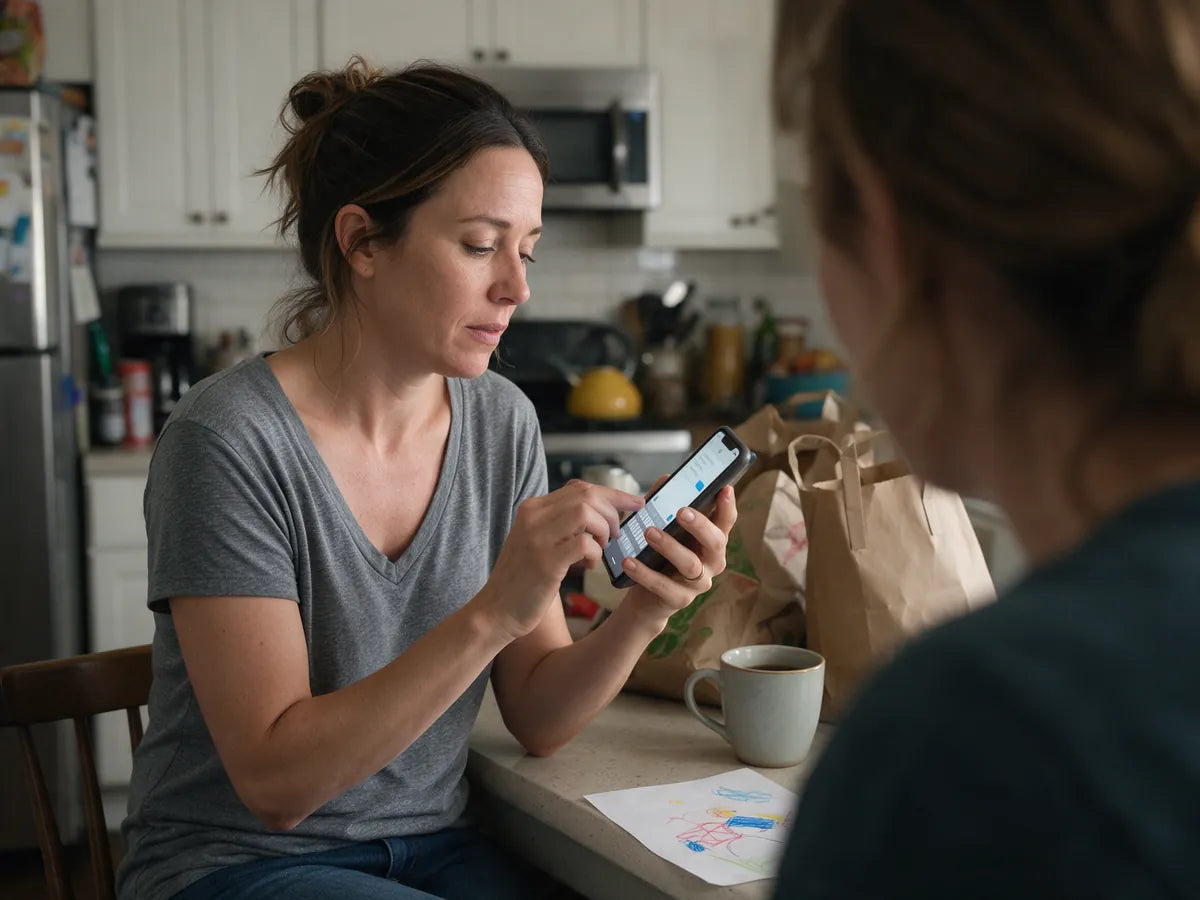
A useful first text after a fight has a small job: say what you can honestly own, state what you need now, and make the next conversation easier to arrange. It does not have to settle the disagreement, prove who was right, or produce immediate forgiveness. The examples below are fictional starting points, not messages that guarantee a particular response.
Decide what the text is for
Before writing, finish this sentence privately: “The next thing I need to communicate is…” You might need to apologize for shouting, ask for a pause, clarify a practical plan, or say you are not ready to continue. Those are different messages. Combining all of them with a recap of the argument gives the reader several conversations to answer at once.
You do not need to apologize for a belief you still hold. You can regret how you expressed it without pretending you agree. Equally, an apology is not a way to purchase the other person's apology. Own your part because it is yours.
Choose the version that matches what actually happened
If you raised your voice: “I raised my voice earlier, and that wasn't okay. I'm sorry. I'd like to talk about the issue again without shouting. Would tonight work?”
If you still disagree: “I'm sorry I snapped. I still see the plan differently, and I want to explain that without taking a shot at you.”
If you need space: “I don't think I'm listening well right now. I'd like a break and to check back in at eight. Does that time work?”
If you received an apology: “Thank you for apologizing. I appreciate you naming it. I'm still hurt and need a little time before talking more.”
Do not copy the time, feeling, or promise unless it is true for you. “I'm not going anywhere” is not a reassuring line to borrow when you are considering leaving. “I won't do it again” is not stronger than a modest action you can actually keep.
Edit for one observable moment
Look for sentences that claim to know your partner's motives. “You don't care about my time” makes a conclusion. “I was waiting at seven and didn't receive an update” describes the example you want to discuss. You can name feeling hurt or unimportant without turning that feeling into a proven statement about the other person.
Remove sarcasm that carries a second argument. Replace a vague request to “do better” with something understandable, such as sending an update when a plan changes. Keep the bigger pattern for a conversation with room to address it.
Choose a format that is usable and safe
An in-person conversation is not automatically the right answer. Distance, disability, work schedules, privacy, and personal communication preferences matter. A phone call, written exchange, or face-to-face conversation can each be appropriate. The useful question is whether the format allows both people to participate without pressure or fear.
When you arrange a pause, agree on a return point rather than following a universal waiting rule. There is no timer in this guide that tells you when either person should be emotionally ready.
If they don't reply
A read receipt does not explain why someone has not responded. Avoid sending a stream of new arguments to fill the gap. If a practical decision has a real deadline, state it once and explain what you will do about your own plans. Do not invent an urgent deadline as a test of love.
When this guide is not the right tool
Fear, threats, coercion, stalking, or violence are not ordinary wording problems. Do not prioritize a conciliatory text over safety. See support options or Unspoken's safety page. A date, gift, or softer message is not a substitute for protection.
Try a draft without sending it
Browse the fictional message examples, then use Before You Send to work on your own words. Keep the details truthful, change anything that doesn't sound like you, and decide for yourself whether a message should be sent.